ATL’s UEA Sea glider project
Another addition to our recently completed list was ATL’s UEA sea glider project
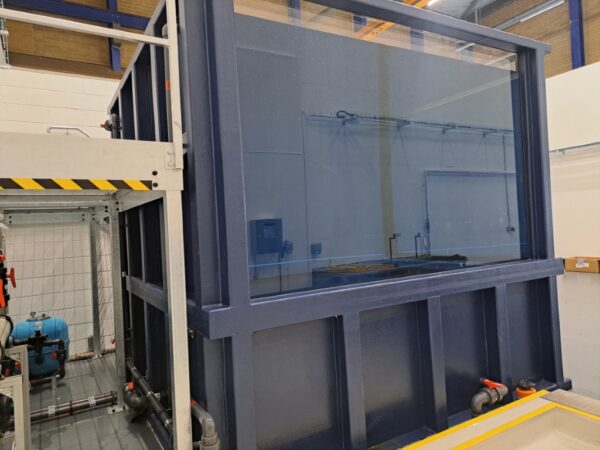
ATL successfully tendered for the design and construction of a large sea glider test tank with recirculating filtration system for the University Of East Anglia’s (UEA) dedicated facility on campus in Norwich, UK. ATL’s UEA sea glider test tank forms a central part of the newly upgraded UEA facility. The challenge was presented to ATL to design and manufacture a seawater tank with internal dimensions of 3000mm x 3000mm x 3000mm high which could be viewed through 2 sides. The oversize bespoke steel framed GRP composite tank structure was fully prefabricated at ATL into a base and top half sections.

Prefabricated tank section works underway at ATL
It was necessary to build the tank sectionally due to access height restrictions into the laboratory space on site. However once through the entrance way the building opened up into a cathedral like space enabling us to literally lift the top of the tank onto the bottom section and roll them both into position. To assist us with the installation process the base section was extensively completed and the upper tank section was pre glazed with the full width acrylic viewing panels. Once complete both over width tank sections were delivered to site on convoy exceptional escorted HGV transport. On arrival the sections were carefully offloaded and installed into location and expertly assembled together. Our team then went about completing the assembly and waterproofing of the tank sections.
As part of the UEA Sea glider project we also designed and installed a dedicated recirculating filtration system. This included full flow UV disinfection to help maintain the quality of the seawater used when testing the UEA sea glider units.

A dedicated filtration system was provided
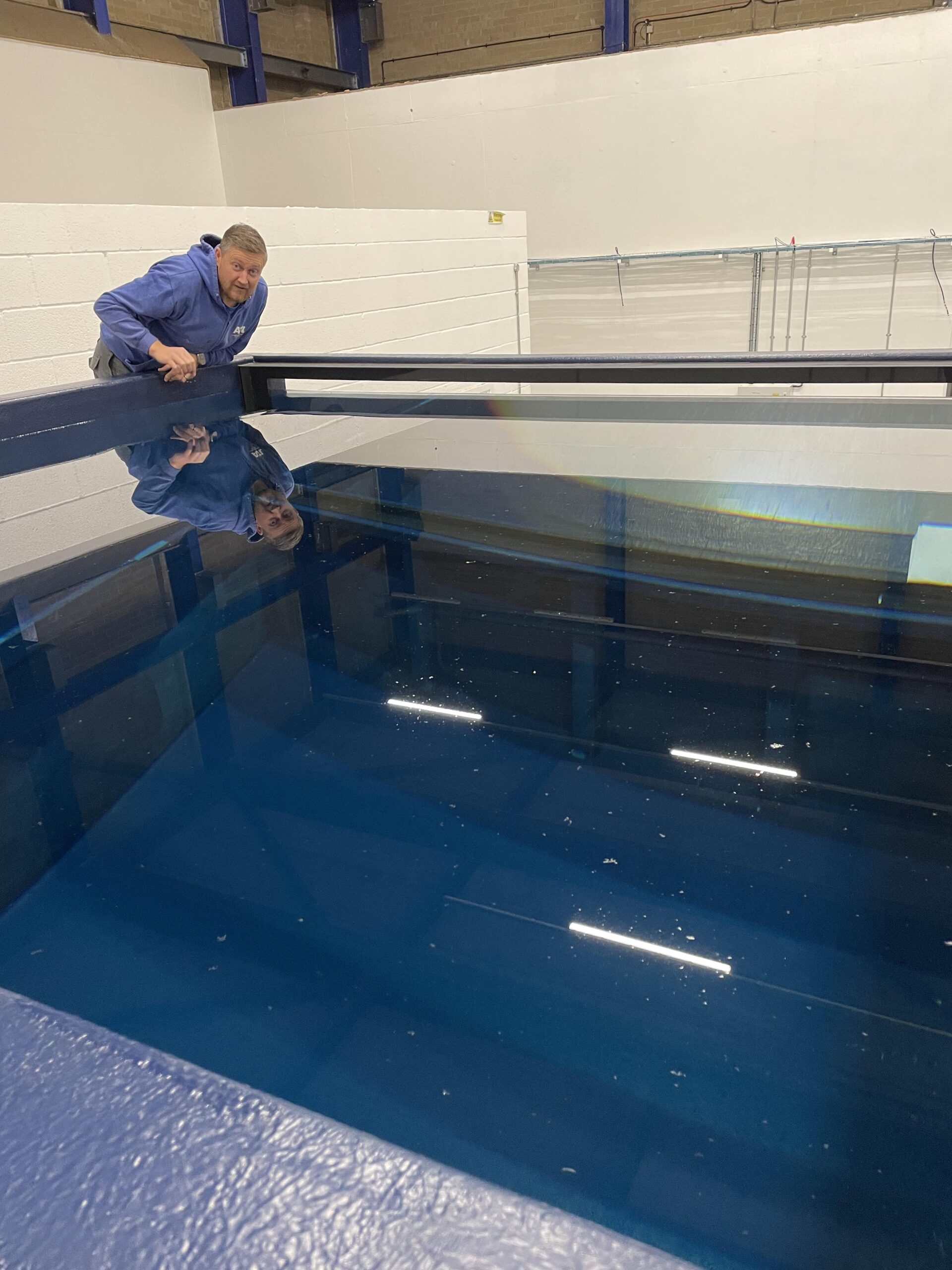
Nick checking over the tank during hydro testing
Our tank provides the scientific team on site the ability to test the ballasting, buoyancy and functionality of the sea gliders under strictly controlled laboratory conditions.
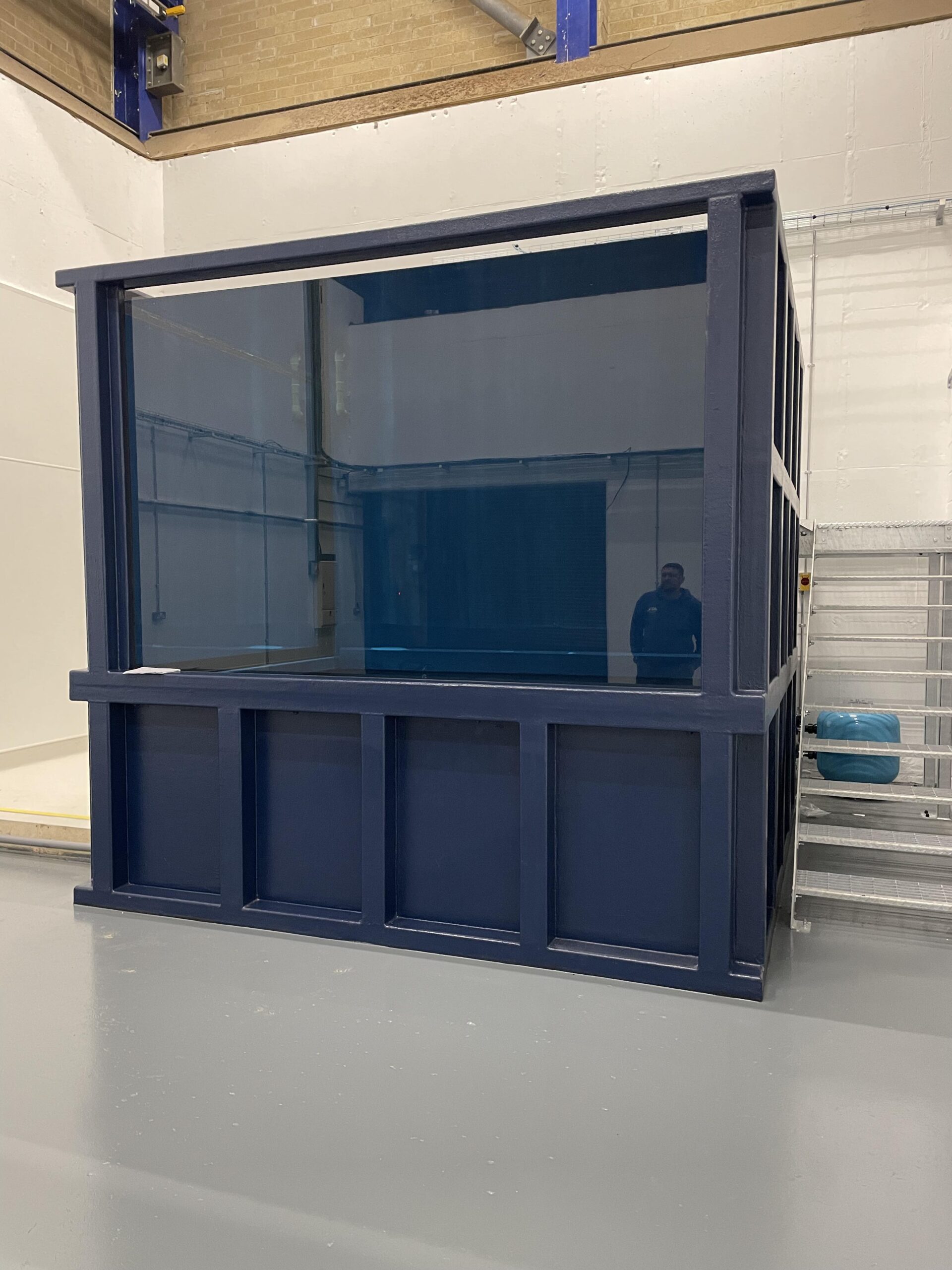
Our tank fully tested and operational – just add sea gliders!
This process is necessary before the units are deployed around the worlds oceans to gather and relay vital scientific data back to the laboratory for analysis. Read more about this exciting project here