Unlocking the Severn at Digilis Weir
Another one of our recent amazing achievements was being involved with the unlocking the Severn at Digilis weir
ATL has been working on this project for some time and last year we were formally appointed as specialist contractor to civil engineering giants Keir Infrastructure
The unlocking the Severn at Digilis Weir project is in the heart of Worcester. Its part of a network of fish passes being introduced along the banks of the river Severn. This is an ambitious 5 year conservation and engagement project opening up Britain’s longest river for the rare fish that depend on it. Hundreds of thousands of Twaite shad used to migrate up the River Severn each year to reach their natural spawning grounds. However weirs installed in the mid-19th century blocked the shad’s route and the population on the Severn crashed. Today they are one of the UK’s rarest fish. Shad don’t have the ability to leap over obstacles in the river, unlike salmon, which have adapted to swim past boulders and waterfalls as they travel upstream to spawn. Whilst shad can swim through fast-flowing water, they avoid turbulent patches and are disorientated by complex flows. To overcome these issues the largest deep vertical slot fish pass was designed in conjunction with the lead organization Canals and rivers trust
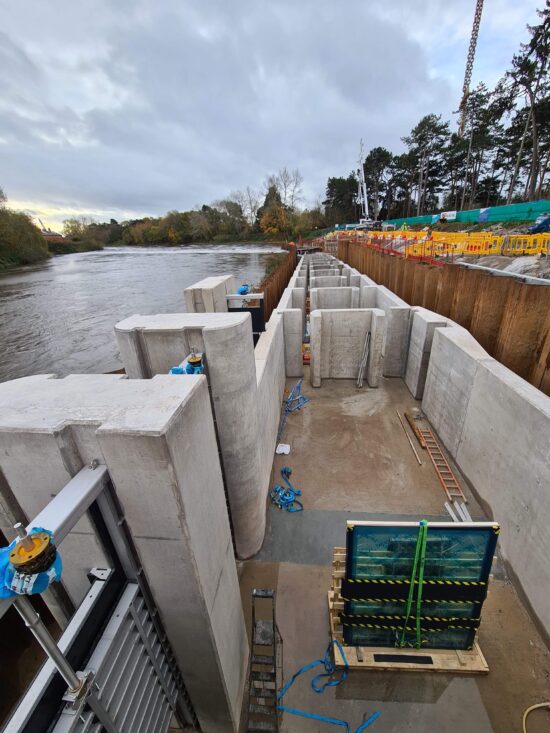
Due to the ‘in river’ location the site construction works were completed behind a specially built steel coffer damn. The vertical slot fish pass is a 100m long reinforced concrete channel incorporating a series of ascending pools to imitate a natural feature of rivers.
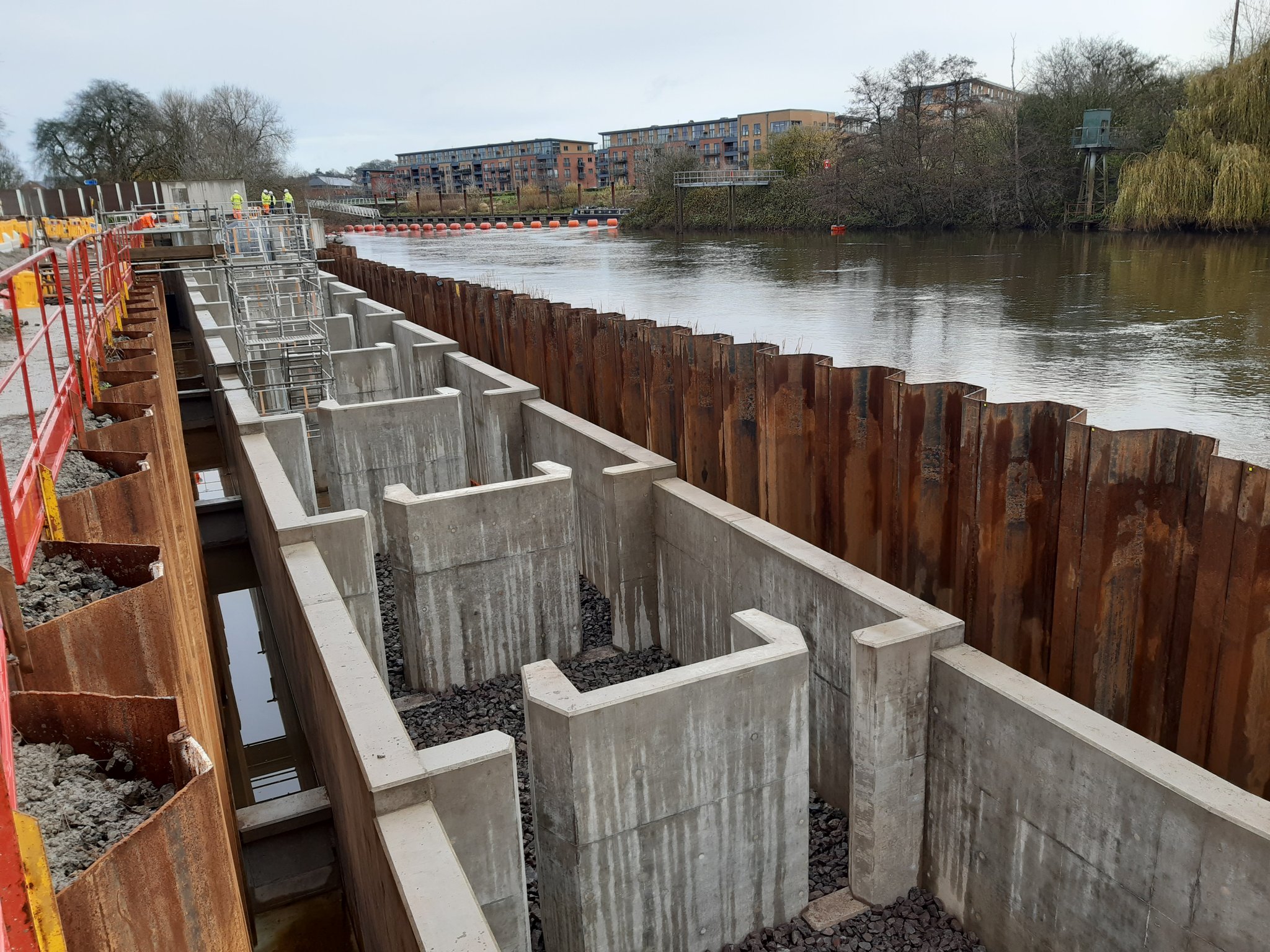
The deep slot fish pass at Digilis Weir comprises a series of ascending pools
The river water will split off into the pass which runs along the bank at Digilis over stones before rejoining the main course above the weir. This allows the shad to swim above each weir in manageable steps. The Unlocking the Severn at Digilis Weir fish pass differs from the other fish passes currently being installed. The Digilis Weir fish pass includes underwater viewing windows in a visitor gallery. It is intended that this viewing and monitoring gallery will form a hub of research for universities which is where ATL became involved. With over three decades of experience in designing and installing underwater viewing windows, ATL leaders in aquarium technology were the go to specialist for the unlocking the Severn at Digilis Weir project.
Today we are all too familiar with the dangers and risks of heavy rain causing rivers to burst their banks resulting in severe flooding. ATL were tasked to assess and mitigate the risks of floodwater on the underwater windows used in the unlocking the Severn at Digilis Weir project. This meant that potentially the water level could rise a staggering 8 metres above normal river level and our windows had to be capable of withstanding this increase. ATL appointed and worked alongside a team of specialist engineers to develop a specification for heat soak toughened and laminated glass panels using specialist interlayers. This interlayer technology reduced the thickness of the glass leaves bringing many hidden benefits to the project. Following on from this we worked closely with our UK based glass producers meaning we could further optimize the window specification.

One of ATL’s heat soak toughened and laminated glass viewing panels ready for unlocking the Severn at Digilis Weir
As the fish pass construction neared completion, ATL were called onto site to complete the installation and sealing works for the glass windows into the fish pass gallery.

Craning in ATL’s underwater windows for Unlocking the Severn at Digilis weir
The installation process went smoothly and the windows were successfully installed by the ATL technician team.

Installed and sealed. The first of ATL’s underwater windows in position.
The windows have already been successfully tested. Heavy rains between Christmas and the New year saw the river Severn go into spate breaching the coffer damn and flooding the fish pass. Needless to say ATL’s windows did exactly what the were designed to do without incident.
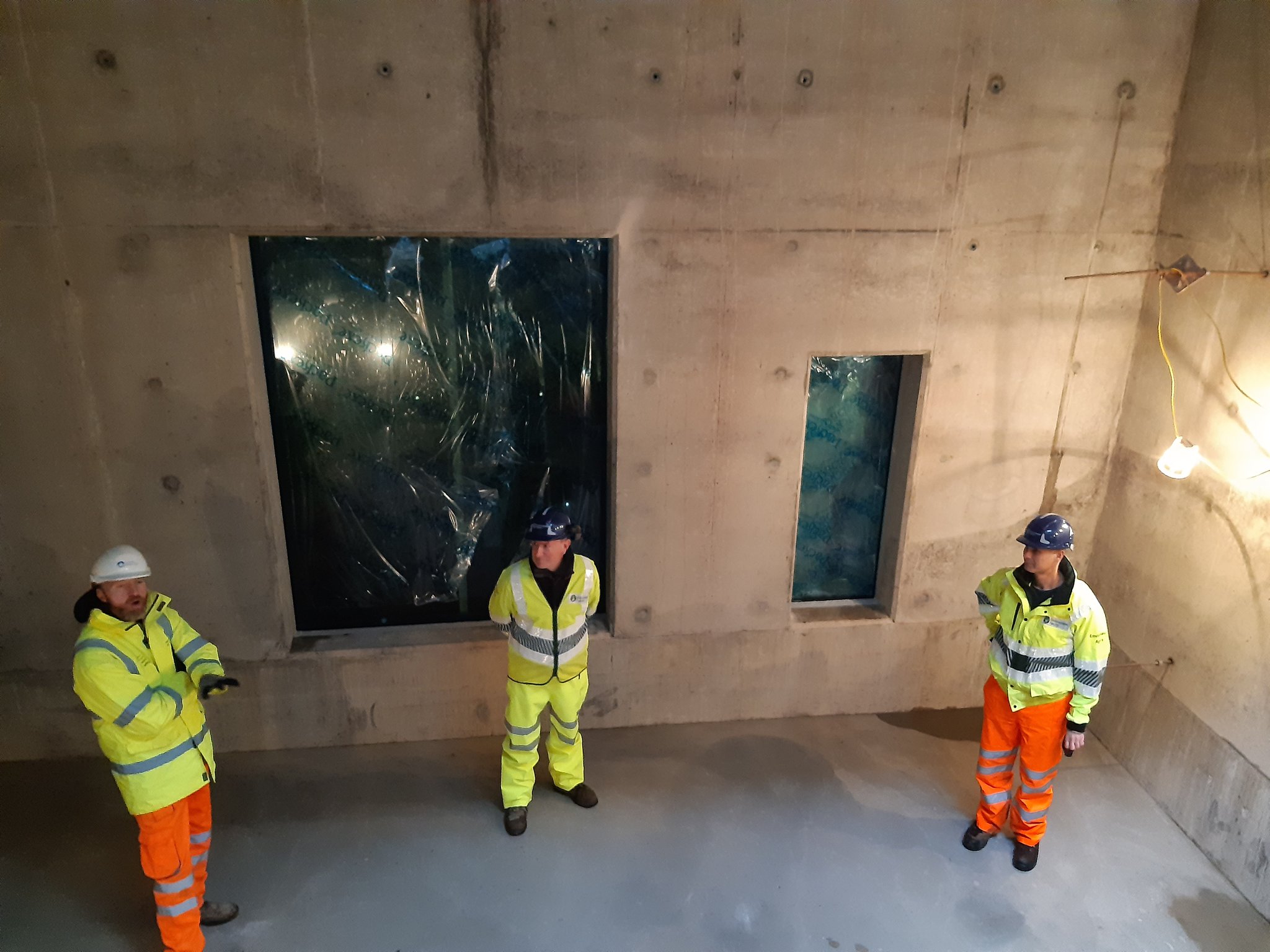
ATL underwater windows at Unlocking the Severn at Digilis Weir
This really has been an incredibly important and very interesting scientific project for the ATL team to be involved with. Working alongside civil engineering giants and public bodies such as the environment agency demonstrates how ATL capably operates in technically demanding situations. Going forward we will be sharing and publishing more details on this exciting project via our social media platforms. Until then take a look at this interesting article on the new civil engineer